
Self-consumption
Shift surplus PV production from midday to evening demand and cut imported energy.
Applications
A battery is only an investment when it is tied to a clear use case. These are the scenarios where our systems deliver the strongest return.
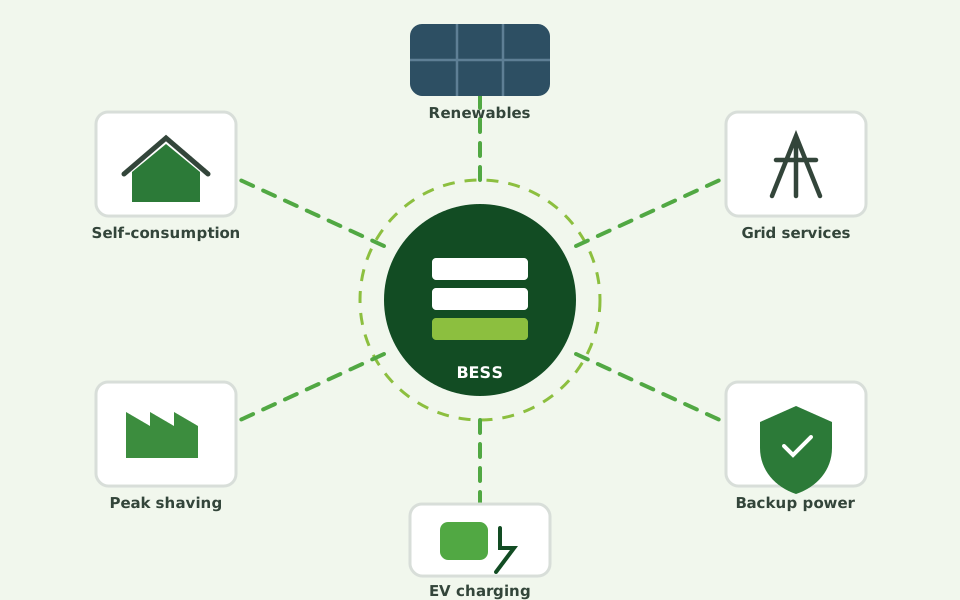
Most projects combine two or three of these strategies in a single control logic.
Shift surplus PV production from midday to evening demand and cut imported energy.
Cap demand peaks to reduce capacity charges and avoid costly grid-connection upgrades.
Charge during low-price periods and discharge in expensive hours, automatically.
Keep critical circuits running through outages with sub-second transfer.
Combine PV, storage and generators into an islandable, self-balancing system.
Frequency response, capacity markets and grid-forming operation for front-of-meter assets.
Each sector has its own constraints — footprint, availability, grid code and reporting. The configuration follows those constraints, not the other way round.
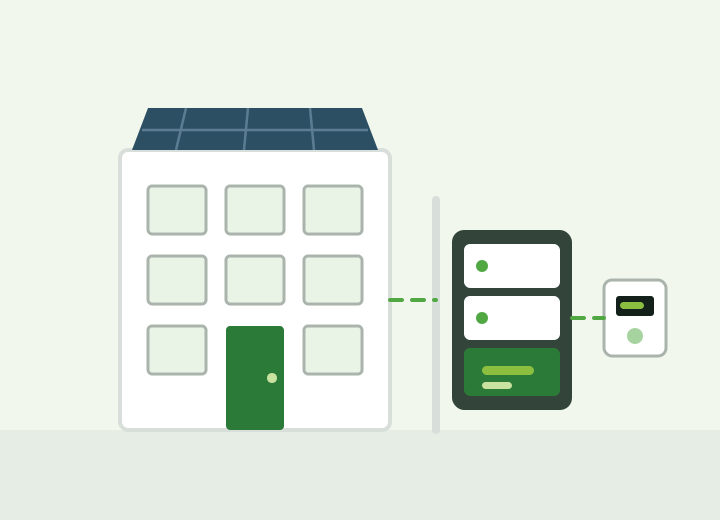
Homes, villas and residential communities looking to maximise self-consumption, protect against outages and lower their energy bill.
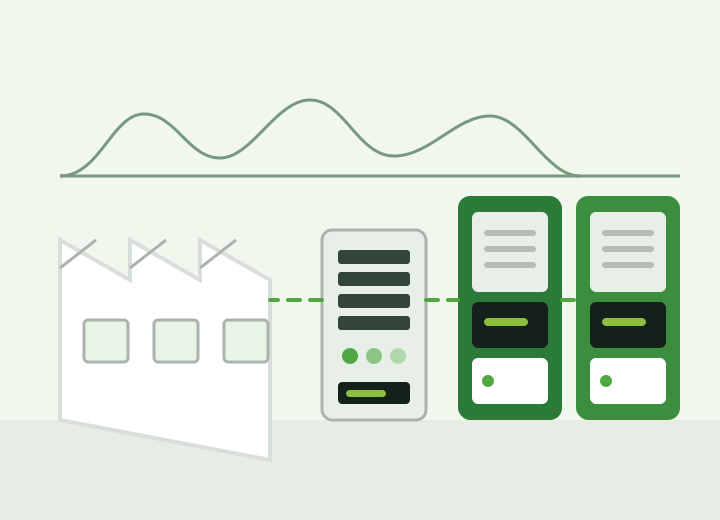
Manufacturing plants, logistics hubs, retail chains and hotels with high demand charges and continuous process loads.
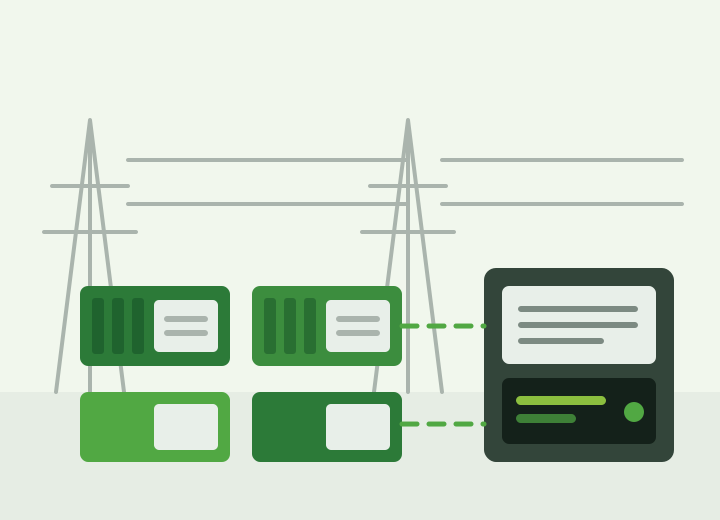
Independent power producers and grid operators requiring capacity firming, renewable time-shifting and ancillary services.
Base stations, edge nodes and technical rooms where footprint is tight and availability is non-negotiable.
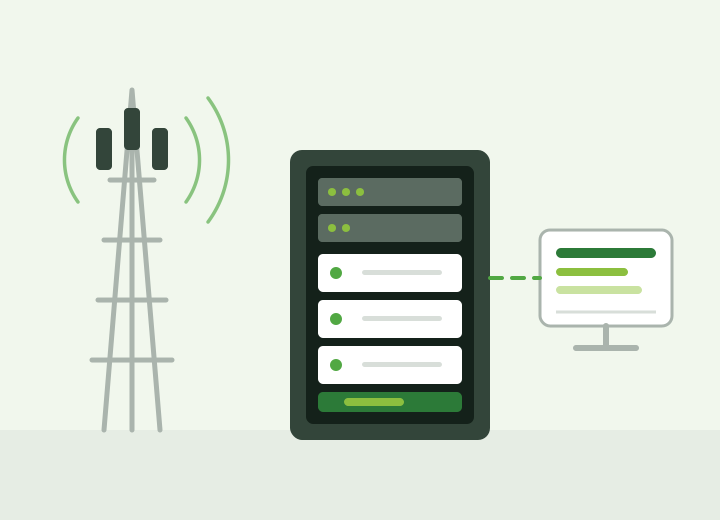
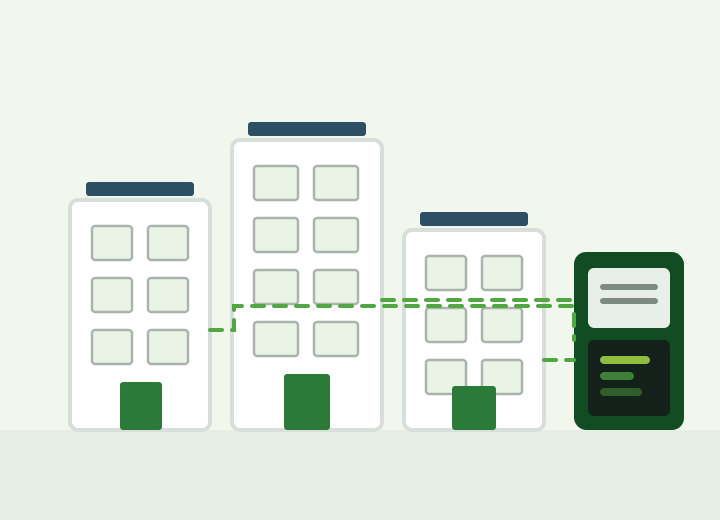
Asset owners and operators standardising storage across multiple buildings, with consolidated monitoring and reporting.
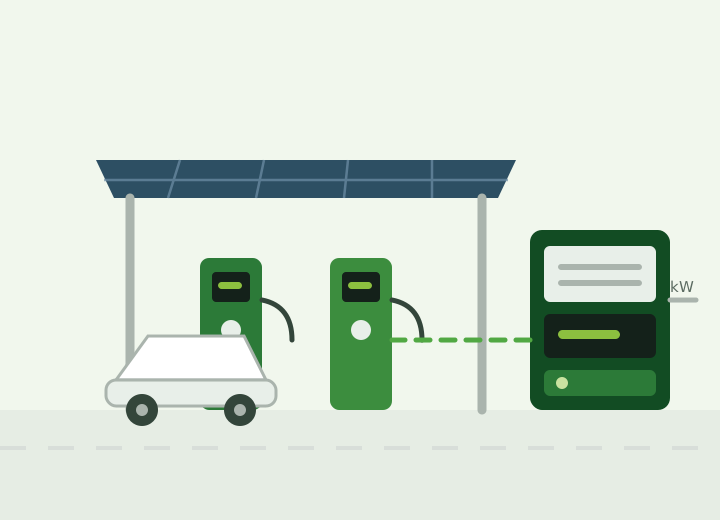
Fast-charging sites that must deliver high instantaneous power without reinforcing the grid connection.
| Sector | Recommended platform | Typical range |
|---|---|---|
| Residential | Residential storage | 5 – 40 kWh |
| Telecom & technical rooms | Desk & rack storage | 15 – 100 kWh |
| Commercial & industrial | Commercial & industrial | 215 kWh – 5 MWh |
| EV charging hubs | Commercial & industrial | 215 – 840 kWh |
| Real estate portfolios | Rack + commercial combined | 50 kWh – 2 MWh |
| Utility-scale plants | Utility-scale blocks | 5 MWh and above |
Indicative figures. The final configuration is defined after a technical assessment.
Share your use case and constraints and we will identify the configuration that fits best.